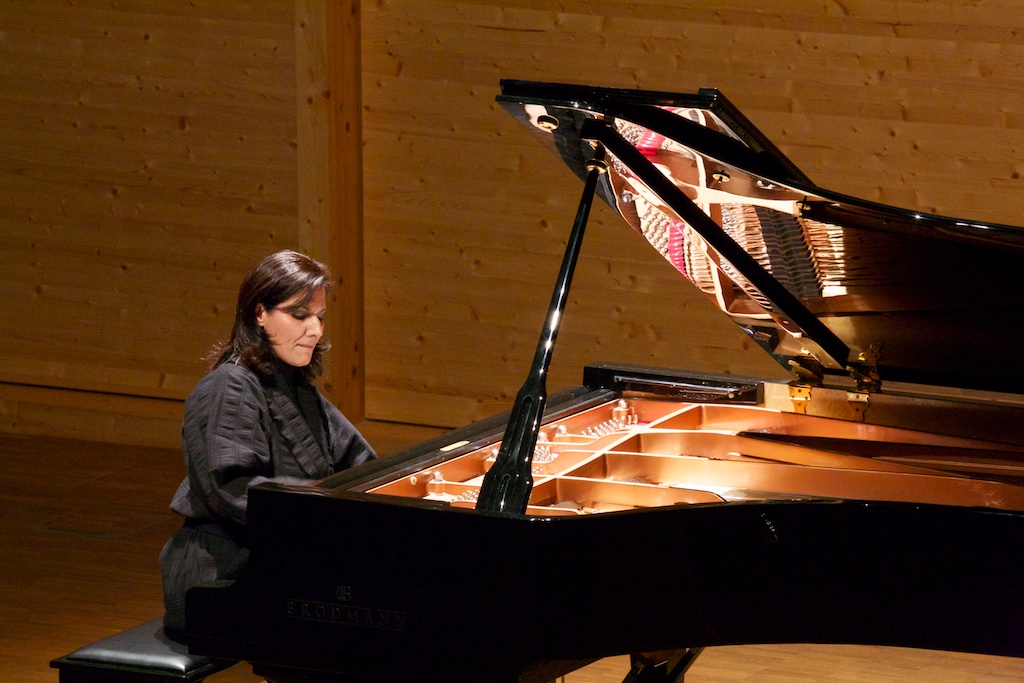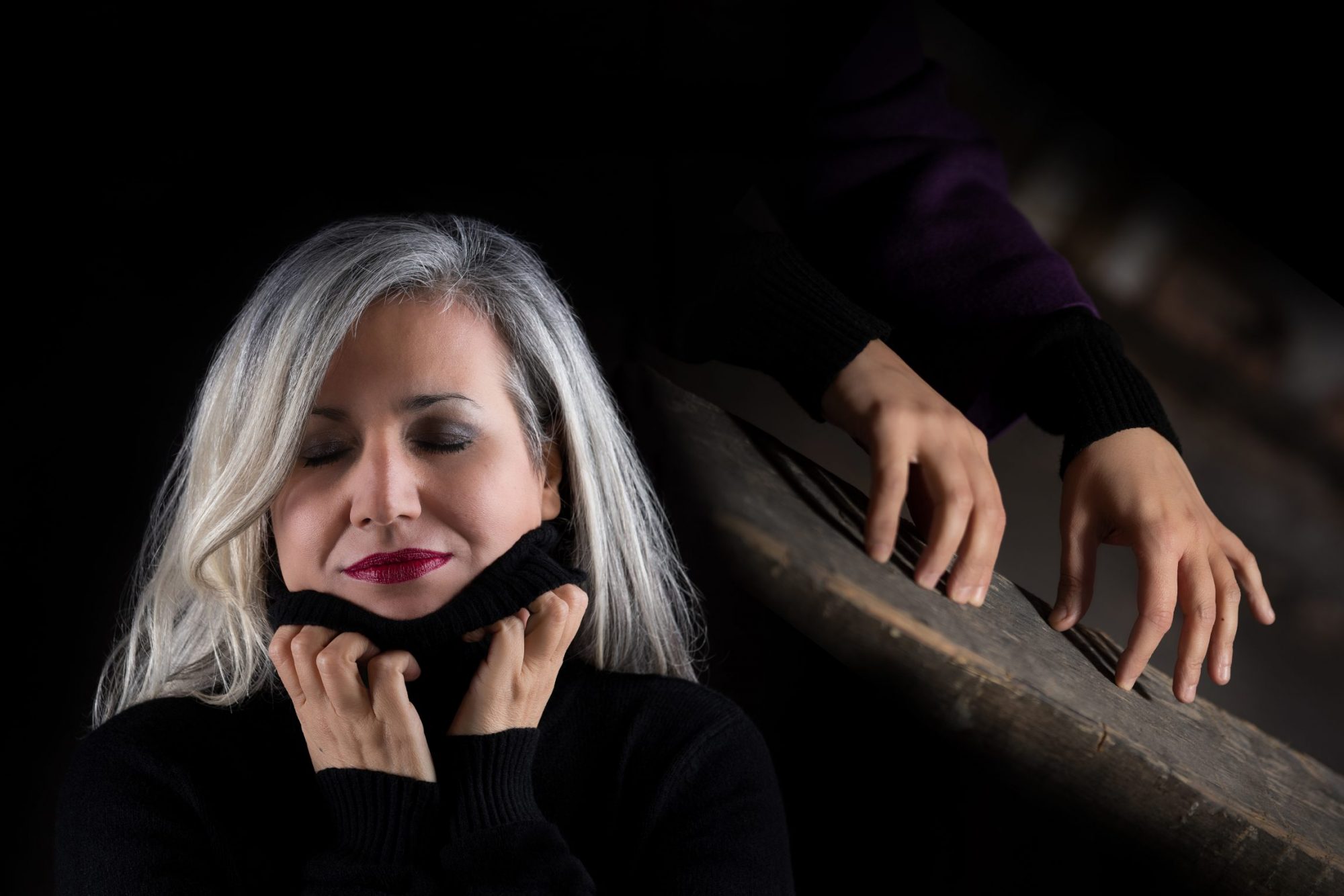
Faithful pianists don’t cheat Beethoven!

Textual fidelity, accurate reading of the score, focussed analyzing of the notes, meticulous reproduction of the dynamic indications, objective reconstruction of the composition, parsimonious use of the pedal, keen performance…we can go on. This could be the description of the way of interpretation offered by most pianists today in matter of Beethoven piano sonatas.

“Beethoven wrote everything in the score!” – some insiders would certainly affirm that. And it is true.
But most pianists seem to forget, or at least, to let expression completely aside when playing Beethoven.
The musical power of communicating was the real language that Beethoven consequently used to express all thinkable human emotions. From anger to serenity, from sadness to happiness, from pain to freedom, from resignation to joy. Each Beethoven sonata is a reflection of his spirit at that particular time of the Opus number and year thereof. When a pianist is playing his sonatas, then he is reading his musical diary. When a pianist has understood those works, then he is experiencing Beethoven.

Meeting Beethoven means facing his spirit. This can be possible only when letting go the inspiration through the expression of his works. Interpretation is not just textual fidelity to the score, it is far more than that. It is discovering the truth between the notes, understanding the meaning of an abstract language like black lines and signs and points on the paper, it is finally enhancing the human power of expression to reach the spiritual need of the soul.
That´s Beethoven, force of spirit.

Unfortunately, most pianists are not aware of this, they prefer to stay attached to the music text, thinking this is interpretation.

Posted in English | Tagged , , , , , , , , , , | Leave a comment

Shura Cherkassky – 1909-1995

A terrific singing piano tone, a sublime technique, always serving the purpose of the musical message, and a perfect seducing interpretation.
Alexander Isaakovic Cherkassky, known as Shura Cherkassky, was one of the leading personalities among the generation of great pianists of the 20th century. He started his early piano education with his mother Lydia. Later on he became pupil of Jozéf Hofmann.
His concert career lasted through his long life, in fact he was actively performing until his death 1995.

What made his approach to the piano that singular?
He was able to focus on the keys with astonishing concentrating power, his interpretations were full of inventive musical atmosphere, he always created inspiring piano recitals for the audience.
Shura never played the same piece the same way. Spontaneity and freshness characterized his playing, the purpose of creating the music in every single moment drove this excellent artist to the highest level of musicianship.

One of the best recordings of Shura Cherkassky to be absolutely mentioned is Tschaikovsky Piano Concerto No.1 B-Flat minor. The best Maestoso of this concerto ( first movement ) ever played.
No other other pianist could reach this peak in this particular piece like Shura Cherkassky. Hard to believe, but true.

A tribute to his teacher Hofmann: Kaleidoscope

Posted in English | Tagged , , , , , , , | 1 Comment

“Pardon me for sitting down while I play…”

This week our cover story is dedicated to a wonderful pianist, who actually was more a fantastic entertainer: Danish pianist, conductor and comedian Victor Borge.
His funny point about famous piano pieces and telling several music jokes have been characterizing his performances.
It is interesting to notice that Victor Borge enjoyed the best music education when he was a child, his teachers were Liszt´s student Frederic Lamond and Busoni´s pupil Egon Petri.
But he discovered quite early that he didn´t really like the serious concert business, so he rather took the more funny path of a music career.
As he said, “Laughter is the shortest distance between two people”.
If you look at his videos, you will certainly not be able to contain your laughter…Victor Borge was right!
In music it´s often about fun…

Posted in English | Tagged , , , , , | Leave a comment

2010 – Schumann meets Chopin

Next year 2010 two great romantic composers share the celebration of their year of birth, obviously 200 years later.
Robert Alexander Schumann ( June 8th, 1810 ) and Frédéric François Chopin ( March 1st, 1810 ) marked the Romanticism in its musical and mostly piano tradition for a couple of decades in the middle of the 19th century.
Both defined a very personal style of musical expression.

Schumann’s art of composing was focused on the strong character of German cultural influence “Sturm und Drang”, perpetuating Beethoven’s message of a universal impact of music. Due to his early education, Schumann further developed a more personal style between literary ideas and musical representation. This can be heard in his pieces Papillons Op.2 and mostly in the Carnaval Op.9.
Pianists have generally a problem by interpreting Schumann, especially when they have to follow the indications of Tempi in his piano works. Schumann also characterized his state of mind by regularly changing the speed related to the different thematic expositions. In fact this was the way how the composer perfectly reflected his tormented soul. The pianist should be able to immerge in Schumann’s divided psyche, otherwise the execution of his works will remain nothing but a distorted interpretation which is dispraising the author’s intention.

Chopin was the eternal romantic poet of the black and white keys.
His entire inner being was dedicated to his instrument, the piano. His style is particularly known for the rubato (Italian stolen time ), a special feeling by playing musical phrases in the balance between speeding up and slowing down the tempo.
Chopin’s nature was introverted. Like Schumann he also perfectly reflected this character into his music, creating a very personal and unique art of musical painting.
Chopin was definitely inspired by Bach and Mozart. Bach delivered him the understanding of polyphony and motivic thorough-composition, instead Mozart offered him the simplicity and clarity of a melodic line. Nevertheless Chopin was able to be idiosyncratic enough to personalize his compositions.

Many pianists will get their hands full next year with these two masters.
A question still remains: who will be finally able to pay the most respectful interpretative tribute to Schumann and Chopin?
We will listen full of expectation…

Posted in English | Tagged , , , , , , , , , , | Leave a comment

Adiós Alicia

One of the last great personalities of the piano history left us: Spanish pianist Alicia de Larrocha.
I remember very well that I had the pleasure to attend one of her recitals in Vienna about 20 years ago. A little woman came on stage, but a big sound came out of the piano.
She had an incredible charisma and a powerful way of communicating with the audience. Her gesture at the instrument was not that kind of visual flashy demonstration of flying hands over the keyboard, rather a perfect choreography of well-thought movements.
Her playing reminds us of the great old piano tradition, as pianists like Josef Hofmann, Benno Moiseiwitsch, Shura Cherkassky, Vladimir Horowitz, Rosalyn Tureck belong to it.
This tradition was characterized by a charming piano sound, full of color and vibrating nuances, letting sing the instrument as the human voice, expressing all emotions of the music and perfectly translating the composer’s message.
The Grande Dame of the piano, Alicia de Larrocha died on September 25, 2009.
It seems to be a strange but curious coincidence, that she passed away on the same day Glenn Gould would be celebrating his birthday if he still lived…maybe she has been invited to celebrate with him and his / her old piano friends on another world…

The old piano tradition has now definately reached an end. Unfortunately.
Who knows, a new Renaissance will come?

Posted in English | Tagged , , , , , , , , | Leave a comment

Happy Birthday Glenn!

He was born on September 25, 1932.
If he still lived, he would celebrate today his 77th birthday.
Glenn Gould, a unique musical personality of the 20th century, one of the greatest pianists and a controversial figure, yet a remarkable thinker and philosopher regarding musical points of view and composing.
Doubtless this genius is still among us, we can feel his presence, especially when we listen to his unforgettable recordings…
Happy birthday Glenn!

One of Gould´s funniest moments of his creative streak – Scottish Rhapsody

Posted in English | Tagged , , , , | Leave a comment

Sviatoslav Richter – 1915-1997

He was self-critical, self-demanding, objective in front of the music score and devoted to the audience.
Sviatoslav Richter represents one of the utmost exceptional figures in the pianists´history. His teacher, Heinrich Neuhaus, considered him as a “genius pupil”.
Doubtless he belongs to the generation of the greatest pianists in the past century.
His particular dedication to practice, building up his repertoire studying intensively several works of the piano literature, characterized his serious approach to the music.

Sometimes his performances have been criticized as “cold”, without the proper expression of feelings in the music.
But his intention was targeted at an execution of the composer´s work to the letter, he saw himself as an interpreter, being just between the composer´s message and the receiver – the audience.
He didn´t want to “recreate” the work, rather be captured and dissolved in the music.

Richter was enigmatic, a personality outside every normal path of musician. Probably, that´s why he gained his fame.

We don´t need to approve all his ideas and interpretations. Yet there are some performances of Sviatoslav Richter which are simply overwhelming and distinguish his charisma from other pianists.
Even Glenn Gould praised him as “one of the most powerful communicators the world of music has produced in our time”.

Posted in English | Tagged , , , , , , , , | Leave a comment

A Remarkable Personality

Nowadays everybody knows YouTube as an enormous source of information. No matter what kind of video or just audio related documentation we need, everything can be found there….almost everything.
My regular use of YouTube is concentrated on the search of interesting and historical documents about pianists. A couple of days ago I found something really astonishing. Looking for a comparison between different interpretations of Prokofiev´s Seventh Piano Sonata Op. 83, I have been guided by some comments posted on videos of this piano work. So I discovered a completely unknown pianist, the Russian Vladimir Bakk.
His Prokofiev interpretation really captured my attention to further listening to other recordings.
One of the best examples of Bakk´s artistic expression doubtless comes through the Rachmaninoff´s Second Piano Sonata Op.36. His technical skills are full of transparency, absolutely serving the musical path of the work. His singing tone shows a deep understanding of the melodic line of the score, never played for itself, but always in the logical motivic thorough-composition.
He never neglects to open his soul to the highest purpose of making music with the heart.
Liszt´s Sixth Hungarian Rhapsody No.6 is another extraordinary performance of this great artist.
Never rushing with octaves, keeping a balanced harmony between a vibrant rhythm and a strong musical character of the piece, Bakk creates a fantastic painting, using different colors of sound and putting his entire charm into it.

Unfortunately, Vladimir Bakk is no more with us. He died 2007 at age 63. Quite sad that he didn´t get the proper recognition during his life. The few videos of his performances on YouTube pay tribute to this pianistic genius.
Vladimir Bakk should become an inspiration to all those pianists who want to reach everybody´s heart and soul through the music…

Posted in English | Tagged , , , , , , , , , | 12 Comments

Private Practicing

Last week we had the opportunity to assist to a unique classical music project: the YouTube Symphony Orchestra performing at Carnegie Hall. The musicians came from several countries and have been selected through auditioning videos, which they self-posted on YouTube.
That was the first orchestra “made in the world-wide-web”.

Just check your camera, put it in your practice room, choose the best piece you can play and then just record your little audition to get your chance to be a member of a ”virtual orchestra”.
A good idea, a well-organized project, a particular live performance.

Any instrumentalist was no more required to travel personally to an audition, they could just do it from their home, from their practicing room.

Hm, quite interesting but, do you really like this?
It sounds like in doing so, “virtual voyeurs” are allowed to watch me while I am having my private practicing session at home.
Well, I think that a practicing session should be rather an intimate affair with the instrument, yes, a very close relationship with the piano, for example, like two lovers communicating with each other……
I would let listen from outside the practicing room, it is more exciting and not that interfering for the two involved, musician and instrument, pianist and piano.

Otherwise, why not making an exception and watching a unique pianist doing his unique practicing session in his unique room?
I am sure this pianist also didn´t want to be disturbed and be watched every time he practiced, as said, this is an exception.

Posted in English | Tagged , , , , , , | Leave a comment

Beethoven and Me

My love for the composer,
my passion for his music,
my dedication to his piano sonatas

The musical titan, his force of expression, his masculine character, his spirit, his work, his piano sonatas: all these attributes led me as an artist to be devoted to Ludwig van Beethoven´s work.
I didn´t really know why I was going to engage myself with it, as I began to be intensively involved in the study of the 32 piano sonatas.
But I felt with the power of spirit that I have to go on this journey. Those compositions were “sleeping” in myself for a long time, just waiting to awaken, so I did it and let them come out.

Since I feared his most difficult work, the Hammerklavier Sonata, I had first the intention to study it when I would have finished the work with all the other sonatas.
But this turned out as a false conclusion.

An inner voice was suddenly speaking to me and saying: „Start immediately with the Hammerklavier Sonata! Don´t wait! This piece will be like a „love-hate“ relationship until you will be able to really understand it.“
Hereupon I began to study the work very intensively, the Hammerklavier sonata became my daily bread and butter, I never hated the piece for a single moment, and I was obsessed particularly with the final Fugue.

I discovered that this sonata is the key to all other Beethoven´s sonatas. Once the Hammerklavier has been understood, the musical message of Beethoven has been disclosed.

This is certainly one of the most demanding tasks for a pianist, but to approach labyrinthine and complicated things is a perfect challenge for me, trying to reveal the quintessence of them.

As a woman I feel a big duty coming closer to Beethoven´s musical message.

By all means I do not intend to compete with other male colleagues, but rather to create another way to experience Beethoven´s music.
This has nothing to do with ego, it rather leaves out egocentrism to reach selflessness.
Thereby the identification with Beethoven happens.
As an artist it is a mission for me to perform this wonderful symphonic piano music for the people and to make it hearable as the Master himself was able to hear it only with his heart and inner ear.

Posted in English | Tagged , , , , | 1 Comment